

Locating technology since 1993 · Traiskirchen, Lower Austria
We find what lies beneath the surface.
Without digging it up.
Leak detection, cable faults, drain surveys and utility detection. Located non-destructively, marked to the centimetre, put on record in writing. Opening up and repair are done by your contractor.
20,540 burst pipes found
Water damage and burst pipes in buildings, on supply pipes and in the network. Five to nine cases are handled on a working day; the calculation uses the lower figure.
Calculated from the order records, set pessimistically.
11,216 cable faults found
Cable faults from the service connection to medium voltage. On a working day it is four to five; the calculation uses the lower figure.
Calculated from the order records, set pessimistically.
1,857,120m cables and pipes located
Around 487 metres of cable and pipe routes are located and surveyed per working day. The figure shown is calculated from actually surveyed line lengths.
Calculated from the order records, set pessimistically.
Six areas, thirty-eight services
All servicesWater leak detection
Burst pipes in buildings, flat roofs, swimming pools, heating, water damage.
Drains and sewers
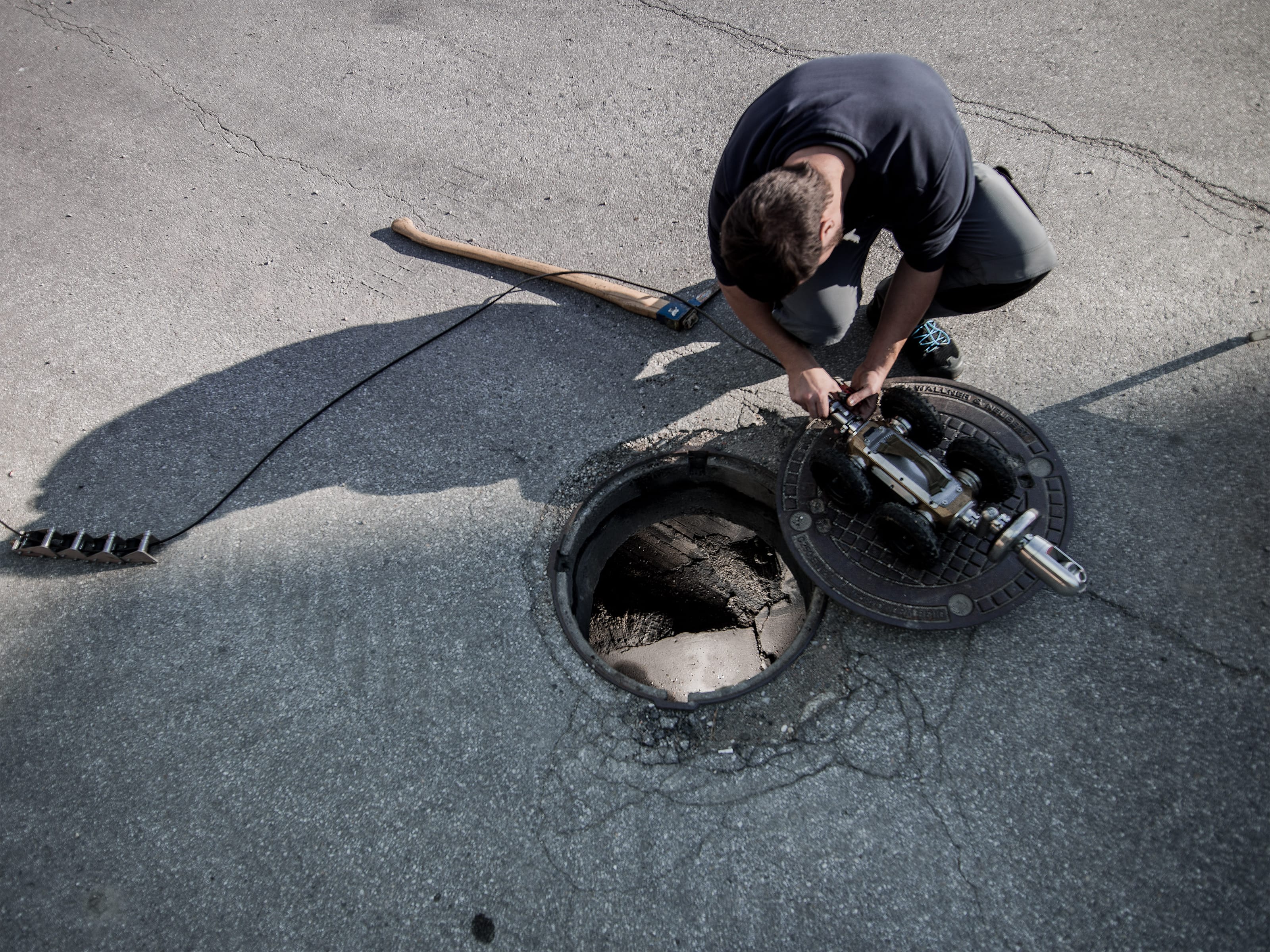
CCTV surveys, 3D surveys and laterals, pipe cleaning, smoke testing, records of older drains.
Cable faults and cable testing
Service connections, low and medium voltage, street lighting, cable testing.
Locating and surveying
Utility detection, site clearance, asset records for GIS, concealed manholes.
Water mains and reservoirs
Water loss analysis, burst location, valve maintenance, service reservoirs, pressure testing.
Springs and wells
Locating and hygienic inspection, cleaning and flow improvement.
Between you and the pipe there is rarely more than a metre and a half – and still nobody knows where it runs.
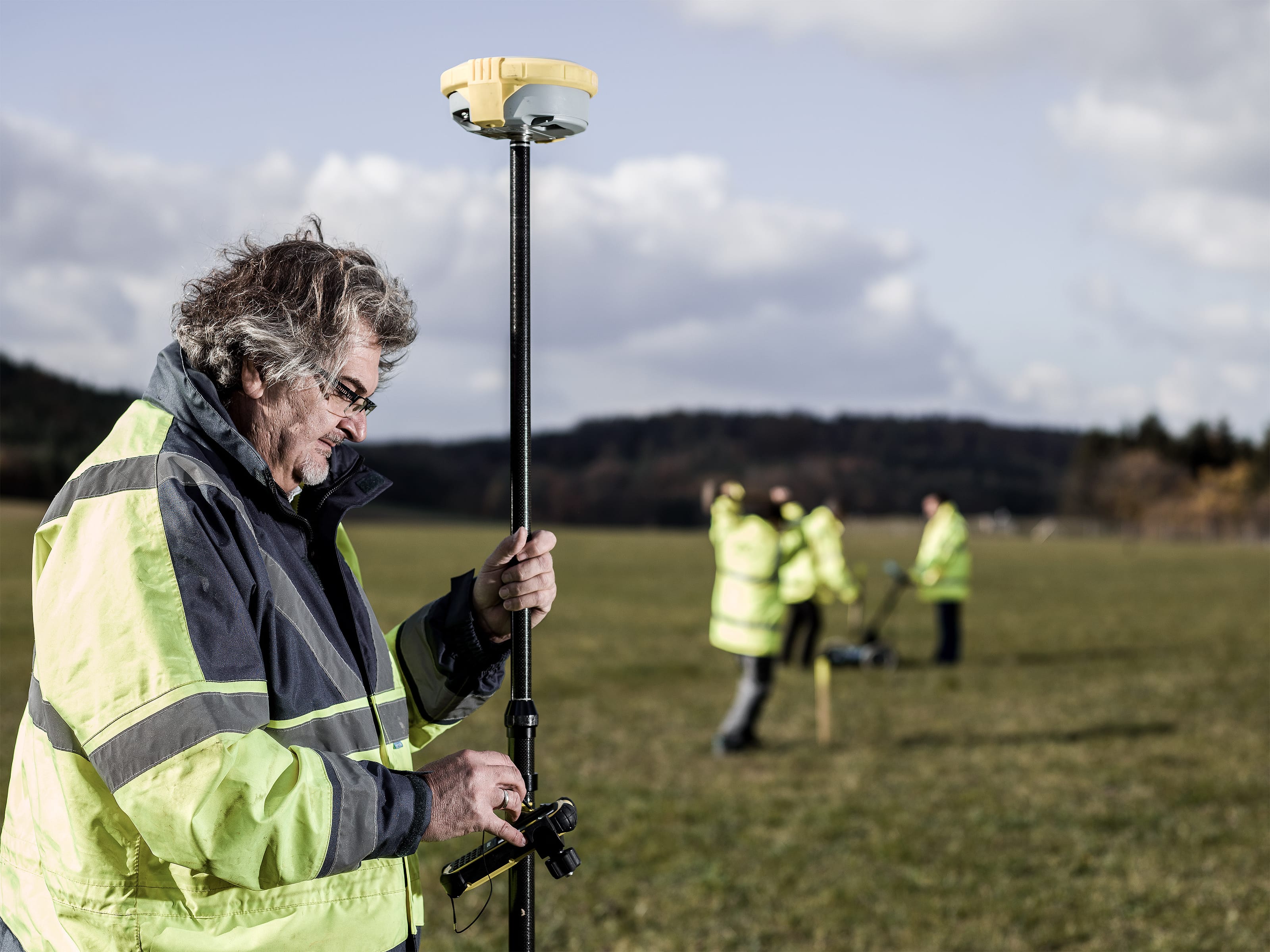
Plans rarely match what is in the ground. We survey the actual route from the surface, determine the depth and mark what was found.
Utility detection
Transmitter on the cable, receiver at the surface: route, depth and branches are traced and marked.
Pipe locating in plastic
Plastic carries no signal. So we transmit from inside the pipe – sonde, push rod or acoustically through sound.
Site clearance surveys
Before the first cut of the spade: the site is probed systematically, every route encountered is marked and taken into the record.
A marked spot, a damage record, a photo report.
Ready to hand to insurer, plumber or network operator. We locate, mark and document – opening up and repair are done by your contractor.
How a job runs, step by step
You give us a call
You describe what you are observing – the meter turning, a wall going damp, a fuse tripping. We tell you which pipes and cables need to be checked and what access we need.
We measure on site
First we narrow down the section, then the point within it. Measurements are taken from outside, with several methods side by side – nothing is chiselled or dug up.
You see where it lies
The point is marked right at your property: on the floor or on the wall, with the depth stated. You see for yourself where to open up before anyone starts.
You get it in writing
Photo report, damage record or survey report, with photographs and a location sketch. Ready to hand to insurer and plumber. Opening up and repair are usually done by your contractor – we do not dig.
Find, buy, learn, maintain
The full circle is rare in this trade: we locate ourselves, sell the same instruments, give instruction on them and keep them in repair. The finding is at the top of this page – the rest is here.
Describe your case.
Fastest by telephone – then we settle straight away which method fits and what you should prepare.
Outside office hours, write to office@cft.at.